**Orientations** Don't miss the opportunity to learn more about our health and weight management program at our free orientation sessions. We are located in the Indianapolis area! If you don't live near a site-we have a Remote Program. Contact us at info@hntindiana.com for more information. Visit our website to check available dates.

Hurry...why weight?
Showing posts with label Nutrition. Show all posts

Monday, June 3, 2013

Cool Whip/Whipped toppings: light, fat free, or sugar free? Which is best?

After the last post about strawberries, it is only appropriate to discuss whipped toppings-a topping commonly used in strawberry dishes.  Which is best regular, light, fat free or sugar free...that is the question. We made a chart to compare not only calories, fat and sugar, but also to compare the ingredients in the products.  Check it out below:

image sources: Cool Whip, Reddi Wip

What does all this mean?  All of the Cool Whips are 15-25 calories/2 tbsp while the Fat-Free Reddi Wip is 5 calories/2 tbsp.  The Regular Cool Whip has more sugar and fat (which is expected) than any of the others compared.  The Sugar-Free Cool Whip and Fat-Free Reddi Wip has less sugar and the Fat-Free Cool Whip and Fat-Free Reddi Wip has less fat than the others.  By calories, fat and sugar alone, the Fat-Free Reddi Wip wins big. 

Looking at the ingredients, water is the first ingredient in all the Cool Whips while cream (imagine that) is the first ingredient in the Fat-Free Reddi Wip.  Note: the Regular Cool Whip has cream, but it is the 6th ingredient listed on the label.  Remember, the ingredients are listed in order of amounts that are actually in the product.  So, the higher on the list the more of it the product contains.  Each of the Cool Whips contain corn syrup (a source of sugar), hydrogenated vegetable oil (trans fat), and high fructose corn syrup (a source of sugar) while the Fat-Free Reddi Wip does not have any hydrogenated vegetable oil or high fructose corn syrup.

The bottom line: The Fat-Free Reddi Wip wins in all categories and is the best choice to top your strawberries this season based on calories, fat, sugar & ingredients.  You can find it in the refrigerated section of the grocery store, unlike Cool Whip which is located in the freezer section.  


Thursday, May 30, 2013

It's Strawberry Season!

May is the start of strawberry season here in Indiana.  The best strawberries are from local patches because they are fresh off the vine.  In Indiana, there are strawberry patches all over the state.  Some even have "u-pick" patches, where you come and pick your own.  These are more budget friendly than just buying from the farmer's stand because you have to do a little work for them!
image source
We love strawberries! Why? Because 1 cup of sliced strawberries is only 50 calories, contains 3 grams of fiber & 90 mg vitamin C (75-90 mg needed per day). Hey, what a great snack!  Add to your Strawberry Health One Meal Replacement + water + ice for a strawberry shake or on top of a Vanilla Health One Meal Replacement one by one with a little light cool whip for a nice summer treat.  Or, you could get really into it and make your own sugar-free strawberry freezer jam to use as an additive to the Health One or your morning 100% whole grain toast.
image source
What do we recommend?  Heading to a local patch to pick some strawberries.  The Indianapolis area has a few locations just outside the city.  Here are the farms that we know of and please share any that you know of that grow strawberries. 
image source


Once you have your strawberries, meal plan them in for breakfast, lunch, dinner and/or snack to help you get your 2 full cups of fruit in each day. 


Wednesday, January 2, 2013

Health One Meal vs. McDonalds Value Meal

Every now and then we get a person who thinks that the meal replacements we use in our medically supervised weight loss program are expensive and "not worth the cost".  According to the USDA the cost of a day's worth of food eaten by the average American is at or above the cost of Health One Meal Replacements (HOMR) for one day. In addition, a CBS news poll showed that nearly 25% of people eat out at a fast food establishment at least once per week and are spending a lot per meal for junk.

Enter...a healthy option in the HOMR, designed to reduce calorie intake while providing all the nutrition that you need (100-125% of your daily needs).  The HOMR is proven for weight loss and reducing/stabilizing blood sugars.  A perfect meal-considering 78 million Americans are obese and over 10% of adults 20+ years old have diabetes.
 
Lets compare the HOMR to two very popular McDonald's Fast Food value meals: the double cheeseburger meal and the Big Mac meal.
 
Big Mac Value Meal (cost with Large diet drink $5.33)
Big Mac:
550 calories
29 gm total fat
970 mg sodium
25 gm protein
 
Medium French Fry:
380 calories
19 gm total fat
270 mg sodium
 
Totals for the Big Mac Value Meal:
880 calories
48 gm total fat
1240 mg sodium
25 gm protein
 
Image Source
 
Cheeseburger Value Meal (cost with Large diet drink $3.19)
Cheeseburger:
300 calories
12 gm total fat
680 mg sodium
15 gm protein 
 
Medium French Fry:
380 calories
19 gm total fat
270 mg sodium
 
Totals for the Cheeseburger Value Meal:
680 calories
31 gm total fat
950 mg sodium
15 gm protein
Image Source
 
Vs.
 
Health One Meal Replacement Shake (cost is < $3.19)
Blueberry Lemon shake
190 calories
1 gm total fat
310 mg sodium
15 gm protein
25% of RDI's for vitamins and minerals

Image Source
 When the comparison is made, the value in the Health One Meal Replacement stands out as it is cheaper, but provides 25% of RDI's for all vitamins and minerals, 15 grams of protein, and less total fat and less sodium than the popular McDonald's value meals shown here. We are very proud of our weight loss/weight maintenance meal replacement that we can provide in our programs. 


Tuesday, December 11, 2012

Health One Meal Replacement vs. Chocolate Milk as Post-Workout Recovery Fuel

Multiple studies have shown chocolate milk to be the best post-workout recovery fuel, but why? Simply put it hydrates while replenishing exhausted muscles with 9 essential nutrients. The unique combination of protein and carbohydrate is perfect to refuel and make it to the next workout and has electrolytes that can be found in any other sports drink on the market (a plus). 

Here are some quick facts from the Dairy & Nutrition Council, Inc.:
  • Chocolate milk is 90% water for hydration
  • Carbohydrate-to replace depleted muscle glycogen
  • Protein-to build and maintain muscles
  • Calcium, vitamin D, phosphorus, and magnesium for strong bones
  • Potassium-to help muscles contract and regulate body fluids
  • B-Vitamins-to help convert food to energy for exercising muscles

With all that being said, we can compare the Chocolate flavor Health One Meal Replacement to Chocolate milk and we find an advantage to using the Health One Meal Replacement-here's why:
  • Health One has 160 calories and provides more benefits as shown below containing more nutrients, protein and less calories from fat
  • Health One has 24 nutrients (the same as chocolate milk, but more!) vs. 9 nutrients
  • Health One has 15 grams of protein vs. 8 grams (per cup)
  • Health One has only 10 calories from fat vs. 20 calories from fat
  • Health One has 24 grams carbohydrate vs. 25 grams carbohydrate
  • Health One can be made into a baked or microwaved product vs. only a beverage

If you have the Health One Meal Replacement to use after a vigorous workout-we say "USE IT" to your advantage!


Chocolate Milk as a post-workout recovery research studies:
-Shirreffs SM. Watson P. Maughan RJ. Milk as an effective post-exercise rehydration drink. British Journal of Nutrition. 2007;98:173-180.
-Watson P, Love TD, Maughan RJ, Shirreffs SM.. A comparison of the effects of milk and a carbohydrate electrolyte drink on the restoration of fluid balance and exercise capacity in a hot, humid environment. European Journal of Applied Physiology. 2008;104:633-642.
-Martin BR, Davis S, Campbell WW, Weaver CM. Exercise and calcium supplementation: effects on calcium homeostasis in sports women. Medicine & Science in Sports & Exercise. 2007; 39:1481-1486.
-Sawka MN, Montain SJ. Fluid and electrolyte supplementation for exercise heat stress. American Journal of Clinical Nutrition. 2000;72:564S-572S.
-Klesges RC, Ward KD, Shelton ML, Applegate WB, Cantler ED, Palmieri GM, Harmon K, Davis J.. Changes in bone mineral content in male athletes. -Mechanisms of action and intervention effects. Journal of the American Medical Association. 1996; 276:226-230

Image Source: 1, 2

Wednesday, October 31, 2012

Pumpkin is Healthy; Here are the Facts!

Pumpkins not only make great Jack-O-Lanterns, but they also are a great addition to a healthy meal plan! 
Here are some quick facts about pumpkin:
  1. 80 calories per cup of canned pumpkin or 5 per TBSP (Like the Libby's Canned Pumpkin)
  2. Rich in minerals: copper, manganese, zinc, iron, selenium, magnesium
  3. 19% Daily Value for Vitamins C, 10% Daily Value for E & riboflavin
  4. Contains 5.125 mg beta carotene (a form of Vitamin A)-found in orange fruits/vegetables
  5. Rich in cartonetoids: lutein & zeaxanthin-associated with eye health and reduced risk of cataracts
  6. 1 cup has 564 mg of Potassium-more than a banana!
  7. 4g protein (4g) &  fiber (10g) per cup
  8. Botanically it is a fruit
  9. Is a winter squash
  10. A typical pumpkin contains 90% water
  11. 80% of the US pumpkin supply is available in October
  12. Pick pumpkins that are firm & heavy for their size
  13. Pumpkin seeds are high in protein, manganese, magnesium, & phosphorus and also contain heart healthy mono- & polyunsaturated fats.  (1/4 cup seeds toasted in oil = 190 calories)
  14. 1.1 Billion is the number of pounds of pumpkins annually produced in the U.S.
  15. Top producing states: Illinois, Ohio, Pennsylvania, & California
  16. More than 90% of the pumpkins grown in the U.S. are for canned pumpkin
If you haven't already, try it in a dish today: roast with other vegetables, puree to make a base for soup, pancakes, waffles, quick breads or muffins.  Find a pumpkin recipe to try HERE!


Tuesday, October 23, 2012

Are Organic Foods "Better"?

Organic or Not?  That is the question of the decade. If you personally buy organic answer this question, why? Is it because organic foods are "better nutritionally" for you OR do you buy them to reduce the possibility of pesticides and antibiotic-resistant bacteria on your food? 

If you eat organic foods because they are "better nutritionally" then you are wasting your money!  "A study released in September in the journal Annals of Internal Medicine concluded that organic products have no significant nutritional advantage over conventional foods, even though consumers often pay more than them." This conclusion followed the review of over 200 studies published from 1960-2011. 

Long term studies are yet to be done or completed showing the health benefits of eating a primarily organic diet to reduce the level of pesticides and antibiotic-resistant bacteria.  However, one thing seems clearer and that is the fact that spending more money for nutrition is not needed.  Conventionally grown foods produce the same nutritional value as organically grown foods. 
 
If you are concerned with pesticides and antibiotic-resistant bacteria, you can spend your money wisely by purchasing organic versions of the highly contaminated fruits and vegetables in this "dirty dozen" list. These 12 fruits and vegetables have the highest pesticide residues of the all fruits and vegetables:
 
Apples
Celery
Strawberries
Peaches
Nectarines (imported)
Spinach
Grapes
Sweet Bell Peppers
Potatoes
Blueberries
Lettuce
Kale/Collard Greens


Wednesday, October 17, 2012

Health One Meal Replacement Provides Complete Nutrition for Weight Loss


Health and Nutrition Technology (HNT) is: a proven program; medical supervision; complete nutrition. By utilizing all three of these aspects we help individuals achieve and maintain a healthy weight. HNT takes a balanced approach to weight loss by applying evidence-based practices. Our focus is YOUR long-term success.
Registered Dietitians provide effective meal plans for every individual in the program. Weight loss goals ranging from a few pounds to hundreds of pounds all utilize Health One, a low-calorie, high quality meal replacement. Simply put, it is designed to replace higher calorie foods while providing balanced nutrition. What sets Health One apart is that it isn't just a shake; it's also designed to be cooked with.
Healthy cooking and eating is a skill. Enhance your current skill level. Use Health One in hundreds of recipes to create variety, texture, enjoyment, and most importantly weight loss. No other meal replacement available has the same versatility. HNT provides the support and tools needed for success, while preparing you for your eventual transition back to grocery store food.
Health One is filling and wholesome. Every serving provides your body with balanced nutrition- the vitamins and minerals needed for optimal functioning. You can select among 4 flavors: Vanilla, Chocolate, Strawberry and Creamy Potato Soup. Product traits in each individual meal:

    160 calories
    15 g highly purified protein
    25% RDI vitamins and minerals
    Gluten-free
    No artificial sweetener
    Excellent satiety
Learn how to end the cycle of dieting and achieve long term success through a partnership with HNT Indiana. Attend a FREE information session at any of our five convenient locations throughout Indianapolis. Visit our website for directions, recipes, and statistics. Change your life…so you can live it! 
Let your imagination run free!
Great for the novice or expert chef.
Health One Potato Soup Lasagna Noodles
Health One Vanilla Blueberry Waffles


Wednesday, August 15, 2012

Know YOUR Nutrition Information Source

Nutrition information is running rampant on the Internet, TV & other media sources.  But, is this good nutrition information or a lot of misinformation?  In a recent episode of Dr. Oz it was suggested that consuming milk and yogurt with some fat is better for you than nonfat.  The same tune was sang by Laine Bergeson who is the Senior Editor at Experience Life magazine in THIS article claiming that whole milk is the "healthiest choice". 

So, do we believe these two sources? In our opinion, it is important to go to the nutrition expert for this kind of information.  According to the Academy of Nutrition & Dietetics, "a Registered Dietitian is a food and nutrition expert who has met the minimum academic and professional requirements to qualify for the credential "RD.""

Who is Dr. Oz & who is Laine Bergeson?

According to sharecare.com, Dr. Oz is,"Vice-Chair and Professor of Surgery at Columbia University. He directs the Cardiovascular Institute and Complementary Medicine Program at New York Presbyterian Hospital....He has authored or co-authored over 400 original publications, book chapters, and medical books and has received several patents. He performs 100 heart operations annually."  This is great if you are looking for information that pertains to the heart, heart surgery, etc, however this does not qualify him to speak on behalf of the nutrition expert community. 

Laine Bergeson has her credentials spelled out on Linkedin HERE.  She is currently the Senior Editor at Experience Life Magazine, but has in the past been an Associate Editor at Utne Reader magazine, Research Editor at Utne Reader magazine, and Researcher at National Institutes of Health (research grant project through the Mayo Clinic).  So does an editor or associate editor qualify someone to provide nutrition information? Most would say no.

Who should we turn to? Here is an article responding to this exact nutrition information and it is written by Barbara Quinn who is a nutrition author, registered dietitian and certified diabetes educator at the Community Hospital of the Monterey Peninsula.  Her recommendation: "I vote to mix and match 2 to 3 servings a day of low-fat or nonfat dairy foods...and save the higher fat choices for occasional occasions".  She also states that, "Until we learn more, here's what we know: High-fat dairy foods are loaded with saturated fat-the fat implicated in raising "bad" LDL cholesterol in our blood.  Low-fat dairy foods have been shown to help lower the blood pressure and possibly help with weight loss.  Some components in dairy fat-such as CLA and transpalmitoleic acid-may offer additional health benefits."

Bottom line: Know where you are getting your nutrition information! Do a quick search in an online search engine (of course, be sure it's a credible source) to know where you are getting your information. 


Friday, September 9, 2011

Fill in the Nutrient Gaps!

We posted about the updated 2010 U.S. Dietary Guidelines earlier this year. You can read about that HERE.  The Advisory Committee singled out 7 nutrients that many Americans are not consuming in adequate amounts.  The seven are: Vitamin D, Folic Acid, Vitamin B-12, Iron, Calcium, Fiber & Potassium. 

Fiber & Potasssium are the two of the seven listed that are not available in supplement form and therefore need to be supplied by consuming foods! Here is a list of a few foods that are rich in fiber & potassium and are great for filling in these two nutrient gaps.
  • baked potato
  • apricots
  • peaches
  • broccoli
  • bok choy


Wednesday, August 10, 2011

Have you seen the NuVal Symbol?

Meijer has implemented a nutritional scoring system called NuVal that gives consumers a quick way to determine the degree of nutritional value they would be getting in foods.  Have you seen this symbol when shopping at Meijer?

NuVal was developed by medical and nutrition experts that gives a food a score from 1-100.  The higher the score the better the nutrition and therefore the better option!  The factors that influence the NuVal score include:

1. Fat Quality: omega-3's, poly- and mono-unsaturated vs. saturated or trans fats
2. Carbohydrates: foods with fiber score higher than foods with more added sugar
3. Vitamins & Minerals: the major vitamins examined include A, B6, C, D, E, folate, potassium, calcium, & magnesium
4. Carotenoids & Flavonoids: foods that are high in these antioxidants score higher than foods with no or low amounts of antioxidants. 

Some foods that have higher scores include: pineapple (99), blueberries (100), grapefruit (99), green beans (100), broccoli (100), tomatoes (96). Find out the scores of the foods you eat most by going to NuVal's website scoring page.

Obviously, a nutrition scoring systems gives rise to the good foods vs. the bad foods mentality.  It tells consumers not to eat foods with scores that are low and vice versa for foods with scores that are high.  At HNT we recommend a well rounded meal plan that can be made up of all foods in moderation.  This system is just one way to help guide your decisions if you are trying to consume foods that have more nutritional value that the foods you are currently consuming. 

Next time you're in Meijer or another store that has NuVal Scores, check out the scores of the foods you are placing in your cart-you might be surprised with some of the numbers!

Friday, July 22, 2011

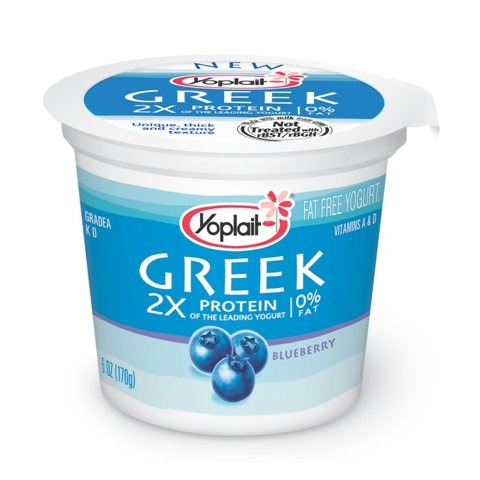
All About Greek Yogurt

Lately, Greek yogurt has been getting a lot of attention so we wanted to break down the information and share why it has been in the lime light of health, nutrition, and dieting.  First of all, there are many brands out there providing options in the Greek yogurt realm of the grocery store including: Chobani, Fage, Oikos, Athenos which all have predominately Greek products (all brands are not listed) and other brands like Yoplait and Dannon (all brands that have Greek lines are not listed) that have introduced a Greek yogurt line in their overall line of yogurts. 


Traditional and Greek style yogurts both have a straining component to the process of production, but when making Greek yogurt additional straining occurs.  The straining process removes water or whey from the yogurt and this is what gives the yogurt a thick, creamy and dense consistency. 

The process of production gives way to the nutritional components and benefits to Greek style yogurt.  It depends on what your goals are for your diet as to whether Greek yogurt is 'better' for you or not.    Because more water is removed in the Greek style yogurts; they are more calorically dense, have a lower amount of calcium (some is lost in the additional straining of the whey), the protein content is higher, and they are lower in carbohydrates per ounce of yogurt when compared to traditional yogurts.  Some brands boast up to 23 grams of protein per 8 ounce container!

Greek style yogurts are gluten free, and are also free of corn, nuts, and soy which are common allergies.  They are vegetarian and a good substitute for many food items.

Using Greek style yogurts as a substitute for mayonnaise, sour cream, cream cheese, or salad dressings can boost nutritional value while trimming unnecessary calories in dips, dressings, and spreads. 

The Food Network did a taste test on Greek yogurts-you can read HERE for more information on the scores and how the different brands lined up.  Recipes and additional resources can be found on any of the Greek style yogurt products web pages. Do you enjoy Greek yogurt? If so, what kind and how do you eat it?
       

Wednesday, March 9, 2011

Registered Dietitian Day-March 9, 2011

Happy Registered Dietitian Day to all our fellow RD's & DTR's!

If you are looking for practical, affordable and accurate nutrition information, Registered Dietitians are the best source. Created in March 2008, Registered Dietitian Day commemorates the dedication of RDs, during National Nutrition Month® and all year long, as advocates for advancing the nutritional status of Americans and people around the world.

Registered Dietitians distinguish themselves as the food and nutrition experts by meeting academic and professional requirements, including earning at least a bachelor's degree, completing a supervised practice program, and passing a registration examination. This distinction is vital when determining where Americans get their nutrition information.

"The term 'nutritionist' is something that is being used quite a bit lately. The problem is that in many states there is no licensure law regarding the term 'nutritionist,' and therefore virtually anyone can call him — or herself — a nutritionist," Villacorta says. "To ensure you are getting trusted, science-based nutrition information, be sure you are looking for the RD credential next to the person's name."

"The expertise of registered dietitians goes so far beyond simply helping people lose weight," Villacorta says. "Whether you are training for a marathon, battling an eating disorder, managing diabetes, recovering from an illness or trying to prevent one or even simply needing help navigating the grocery store shelves, RDs are there to provide you with the personalized nutrition information you need to accomplish your goal."
If you are looking for an accredited Registered Dietitian, you can find it on the American Dietetic Associations website-or by clicking this LINK.

If you are looking for weight loss or weight management help, we at HNT can help! Call 317-489-4817 for more information or click HERE to visit our HNT Indiana website.


Wednesday, March 17, 2010

March is National Nutrition Month (R)

Even though the month of March has almost come to an end, health and weight management will never end. It is still enough time to mention that March is National Nutrition Month (R) and is sponsored by the American Dietetic Association! A month where we, as health professionals, focus on the importance of making informed, concious decisions about food and nutrition as well as encouraging everyone to be more active! This years slogan is 'Nutrition from the Ground Up' or going back to the basics of nutrition.


Click HERE for more information & tips about eating healthy.